
Apr 23, 2026 | Articles
By Kip A. Darling
In late 2025, a small but persistent issue showed up in the Alma Resource Sharing workflow with integrated RapidILL.
This example highlights how issues identified in day-to-day practice can be shared through the community and taken forward in a way that leads to wider improvements.
When newly received requests were populated in Alma, a DOI entered as a full URL (for example, https://doi.org/…) did not trigger automatic population of other bibliographic details, such as the ISSN. The shorter DOI format (10…) worked as expected.
The key issue was not just the formatting. It was the impact on automation.
If a user submitted a request with a full DOI URL, the system could not always complete the process automatically. Where insufficient metadata existed for RapidILL to accept the request, it would stop and move into a mediation queue, requiring staff intervention.
This meant that requests submitted outside staffed hours, such as evenings, weekends, or holidays, were delayed unnecessarily. Requests that should have gone straight through were instead held until someone was available to intervene. This is the kind of issue that is easy to work around locally, but has a wider impact when it happens regularly.
The issue was shared with colleagues in the IGeLU RapidILL Working Group. Led by Dr Lynne Porat, further testing across institutions helped confirm that this was not a local setup issue, but something affecting the wider community.
A support case was then raised with Ex Libris, supported by clear examples and testing. The issue was taken forward by their development team, and a fix was scheduled for the April 2026 Alma release.
Following that release, testing shows that both DOI formats now work as expected, and requests can once again move through the workflow without interruption.
Why this matters
This is a small fix, but it makes a real difference.
When automation works, requests can be processed quickly, including outside normal working hours. When it breaks, even in small ways, delays build up and staff have to step in to fix things manually.
Fixing this issue helps to:
- keep requests moving without staff intervention
- avoid delays outside staffed hours
- reduce manual corrections
- make the workflow more reliable
The role of community and partnership
This example shows how sharing issues and working on them together can lead to real improvements.
The IGeLU RapidILL Working Group helped test and confirm the problem across institutions and supported the evidence behind the case. That made it easier to show that this was not just a local issue, but something worth fixing at system level.
It also shows the importance of responsive vendor support. Once the issue was clearly described, it was taken forward and resolved.
Many improvements are raised through formal channels such as Idea Exchange and CERV, alongside work identified and supported through practitioner communities.
This is one example of the kind of work being taken forward across the community, where small, practical issues are identified and improved for the benefit of all.
Further examples of RapidILL Working Group improvements
Alongside this issue, further ideas have been taken forward to improve resource sharing workflows.
One recent enhancement allows libraries to configure an additional information field within request forms. This enables users to provide more detail for digital requests, which is then shared with lending libraries. Following significant work to champion this enhancement, it was released in Rapido in April 2026 and is scheduled to be rolled out to RapidILL users in May.
There is also ongoing work examining how Author and Editor data is routed in lending requests, following cases where metadata has not been mapped to the expected fields.
These improvements are small in isolation, but they help to reduce friction, improve data quality, and support more consistent processing across systems.
A practical takeaway
If something in your workflow is not behaving as expected, it is worth checking whether others are seeing the same thing.
Raising it, testing it, and sharing it can turn a local workaround into a wider fix.
Ongoing improvements
This is not about a single change, but about the steady work of improving how systems behave in practice.
Each of these adjustments removes a point of friction, whether that is improving automation, clarifying data, or making requests easier to process.
Individually, these changes are small. Taken together, they help services run more smoothly, reduce delays, and support a more reliable experience for both staff and users.
With thanks to colleagues who continue to raise, test, and take forward improvements on behalf of the community.
Opportunity to get involved
Does your library use RapidILL? If you have an interest in how it works in practice and would like to contribute to improving the system for the wider community, there is currently an opportunity to get involved.
The IGeLU RapidILL Working Group is looking to strengthen UK representation and welcomes expressions of interest from colleagues who would like to contribute their experience and insight.
If this is something you might be interested in, you are welcome to reach out to Dr Lynne Porat via her contact details on the RapidILL Working Group webpage.
Jan 21, 2026 | Articles
By Kip A. Darling
Mercian ILL Knowledge Exchange
Abstract
The Mercian ILL Knowledge Exchange, hosted online by Birmingham Newman University in November 2025, brought together 60 interlending practitioners from 21 institutions across the East and West Midlands. The event created space for dialogue on systems, workflows, and policy choices, highlighting the diversity of approaches to interlibrary loans and the shared challenges shaping practice. Key themes included balancing automation with human judgment, managing user expectations, and exploring regional collaboration. Feedback underscored the value of knowledge sharing for both strategic insight and frontline confidence, with participants praising the openness and generosity of the discussions. This review reflects on what the session revealed about sustainable interlending and why such exchanges are essential for building resilient, user-focused services.
Why This Event Happened
On 19 November 2025, 60 interlending practitioners from across the Mercian Collaboration came together online for an Inter-Library Loans (ILL) Knowledge Exchange, hosted by Birmingham Newman University. It was a rare chance to step back from the daily rush and ask: How do we do this work? Why does it matter? And where are we heading next?
The Mercian Collaboration is SCONUL’s regional network for East and West Midlands HE libraries. Its mission is to share expertise and foster development, and that ethos shaped the event’s origins. As Katie Mann, Assistant Director of Library Services (Engagement & Experience) at Birmingham Newman, explained:
“The Technical and Digital Services Team at Birmingham Newman University Library suggested the creation of this event, as many of them are reasonably new to ILL work and do not come from library backgrounds. With limited frames of reference, and having recently created their own processes from scratch due to a change in library management system, they wanted to know whether what they are doing aligns with practice elsewhere and whether there are changes or efficiencies they could make. A knowledge exchange event seemed like a great way to do this.”
That spirit of curiosity and openness set the tone for the day.
A Space for Dialogue
From the outset, discussion mattered as much as presentations. The chat buzzed with questions, humour, and mutual recognition. Participants compared notes on subscription uncertainty, staffing pressures, and system quirks, often discovering that challenges assumed to be local were, in fact, widely shared.
One attendee summed it up succinctly:
“The session was warm and inclusive, offering a comprehensive look at diverse system setups for ILL workflows. This breadth highlighted the complexity and significance of the role within libraries. I was particularly struck by the humanity and generosity of spirit in the knowledge sharing – it was truly commendable.”
Another reflected:
“I found this event extremely valuable. It’s easy to become focused on how your own institution operates, so gaining insight into how other ILL teams (or individuals) work helps strengthen relationships. I also appreciated learning new approaches and being encouraged to think differently about our own processes.”
Comparing Systems and Policies
The event did not gloss over differences. Attendees saw how service design varies according to system choice, staffing models, and institutional priorities. Some teams manage only a handful of requests each year, while others process many thousands. Policies ranged from highly flexible to tightly controlled, including the use of sanctions for repeated non-collection.
For staff from Birmingham City University, this comparison proved particularly thought-provoking. As Kanchan Sharma, Library Assistant, noted:
“Birmingham Newman uses a strike ban for uncollected items. Maybe we can implement this to encourage accountability.”
Carl Wood, another BCU Library Assistant, added:
“I thought the policy of ‘two strikes and you’re out’ seemed strict, but I can see why they have it. It did make me think about the number of uncollected ILLs we have and whether we should be monitoring them.”
This is the value of knowledge exchange: not copying others’ policies wholesale but sharpening local thinking through comparison.
Automation Versus Human Judgment
Technical insights were another highlight of the session. Demonstrations showed how platforms such as RapidILL and Rapido can streamline workflows, reducing manual effort and speeding up fulfilment. However, discussion repeatedly returned to a key insight: automation does not eliminate effort; it redistributes it.
Participants shared examples of auto-advancing rotas triggering duplicate requests, or automated processes failing to account for copyright nuances. The consensus was that sustainable turnaround times depend less on maximising automation than on understanding where human judgment remains essential.
Several attendees also questioned whether traditional KPIs genuinely capture service quality. Headline turnaround figures can create pressure without reflecting the complexity of interlending work. There was interest in metrics that focus on resilience, capacity, and risk, rather than reliance on a single performance number.
User Behaviour and Eligibility
Another strong theme was user behaviour and request quality. Many participants commented on the volume of unsuitable requests received, including items already in stock, open access materials, or requests otherwise outside scope, particularly from early-year undergraduates. This prompted discussion about eligibility rules and request limits.
Some institutions restrict ILL access for certain user groups or cap the number of active requests, while others prioritise education and clearer signposting to alternatives such as acquisitions or existing stock. The shared conclusion was that there is no one-size-fits-all solution, but that intentional policy design, coupled with clear communication, can significantly reduce friction.
Frontline Confidence
For frontline staff, the event offered reassurance as well as challenge. Exposure to consortia solutions such as WHELF+ and to systems like Rapido provided useful reference points, while reinforcing confidence in established local workflows. One attendee summarised this impact neatly:
“It was really useful in regard to knowledge sharing, learning from others, and feeling like we are on the right track with ILLs.”
Looking Ahead
The day also generated interest in deeper regional collaboration, including the possibility of a shared Mercian approach to interlending. These conversations remained exploratory rather than prescriptive, but the appetite for continued dialogue was clear. As libraries face subscription changes, budget constraints, and rising demand, opportunities to learn collectively become increasingly important.
Why It Worked
What made this event distinctive was not only the technical content, but the tone. Participants shared successes and challenges with honesty and generosity. In a profession where interlending work can feel invisible, that validation matters.
Final Thoughts
The Mercian ILL Knowledge Exchange demonstrated the value of creating structured space for practitioners to learn from one another across institutional boundaries. By foregrounding difference, encouraging dialogue, and centring lived experience, the event offered a nuanced picture of contemporary interlending and the pressures shaping it.
As libraries navigate ongoing change, these conversations are essential to building resilient, human-centred services grounded in shared understanding. The strong feedback calling for further knowledge-sharing suggests a clear appetite to continue the conversation, within Mercian and across the wider interlending community.
Oct 31, 2025 | Articles
How libraries around the world are building accessibility into the heart of resource sharing
By Kip A. Darling
Abstract:
This article explores how Birmingham City University transformed its document delivery workflow through cross-team collaboration, aligning local service improvement with global accessibility goals. It situates this change within the wider RapidILL community, where libraries across the UK, U.S., Canada, and Australia are adapting to new accessibility regulations and expectations. Drawing on practitioner insights and vendor perspectives, it highlights how technological advances and shared standards are shaping a more inclusive future for international resource sharing.

Curzon Building, home of Curzon Library at Birmingham City University. Photo provided by Kip A. Darling, used with permission.
At Birmingham City University, our Inter-Library Loans (ILL) team once processed RapidILL scans using traditional flatbed scanners scattered across campus. The process was labour-intensive: lining up books against L-shaped corners, flattening them on the scanning plate, capturing one double-page spread at a time, and repeating until finished. Each scan then required manual editing in Adobe Acrobat Pro—rotating pages, cropping blank spaces (and the occasional wristwatch or hairy arm)—followed by a slow page-by-page OCR process with inconsistent results depending on staff skill and patience.
At our satellite libraries, Library Experience and Stock Management staff helped whenever possible, fitting scans around other duties. Although we set performance goals to support accessibility, the reality was that we were working toward that vision one scan at a time rather than systematically.
Restructure as Opportunity
A departmental restructure in late 2024 that initially challenged our staffing levels became a catalyst for change. Library Experience gained new responsibilities and could no longer assist with scanning, while the Stock Management team were redeployed elsewhere. Our ILL team also lost staffing hours, leaving us at a crossroads: either manage with less or take a chance on something better.
Enter our Digitised Services team. They had long provided scans for reading lists and alternative formats for disabled users and were equipped with professional-grade tools. Following a conversation between team coordinators, they offered to fill the gap in our RapidILL lending service provision.
Partnership in Practice
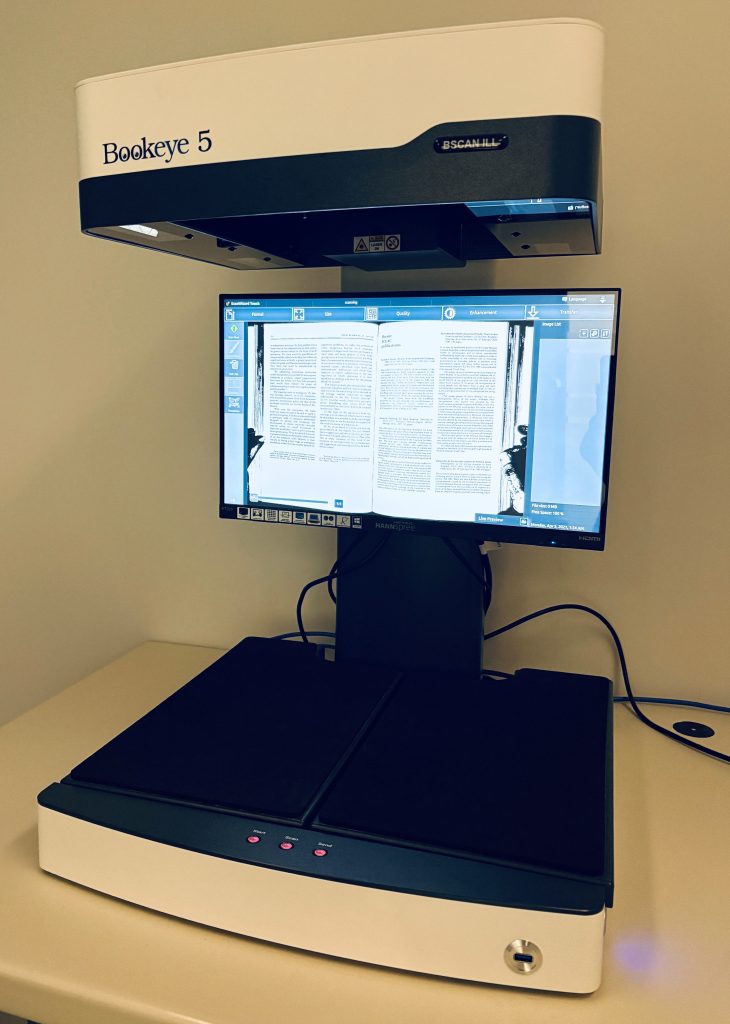
BookEye 5 scanner in use at Queen’s University. Image provided by Nicola Sikkema, used with permission.
Our cross-functional approach soon proved more effective than either team could have achieved alone.
Lee Jones, Coordinator of the Digitised Services team, explains:
“ILL staff handle subject-matter expertise around copyright and patron needs, while we focus on the technical aspects. All requests are logged and tracked, enabling real-time statistics and valuable service insights.
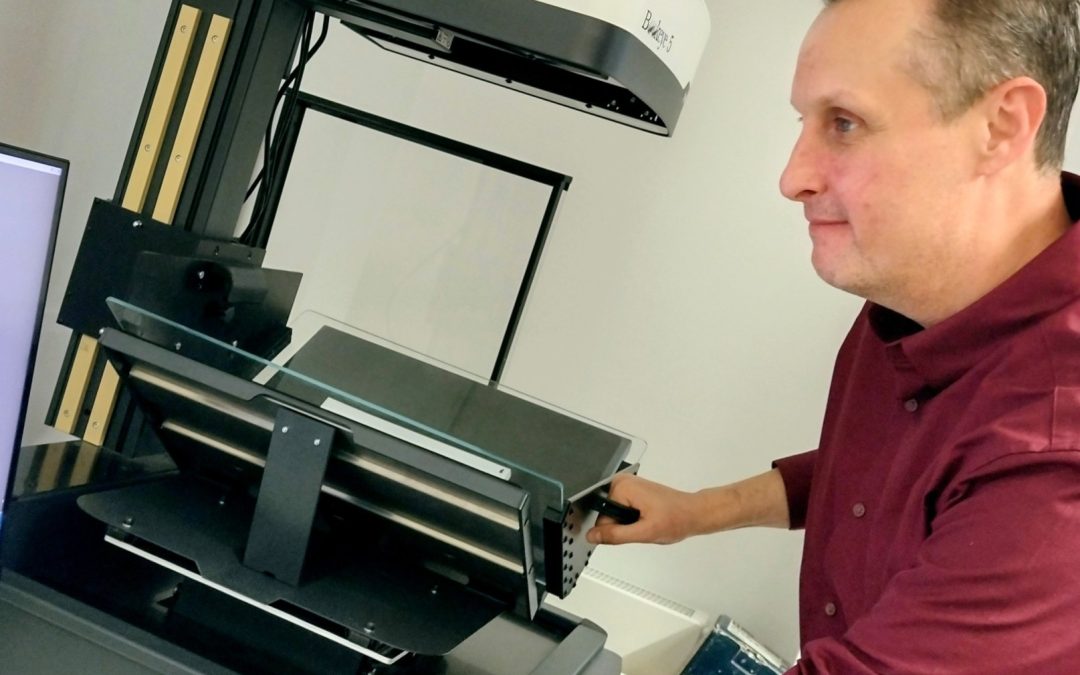
Our equipment includes a Bookeye 5 Archive overhead scanner and ABBYY FineReader software, allowing us to produce high-quality, fully OCR’d documents that meet professional accessibility standards—something difficult and time-consuming to achieve with traditional multifunction devices.”
The Bookeye’s self-adjusting V-shaped cradle preserves book spines while scanning at 120°, and its matching glass plate ensures pages are flat for crisp images ready for OCR. With a 180° glass option for flat items, scan quality up to 600 dpi, and sizing up to A2, the device covers virtually every need.
Once the scan is complete, ABBYY FineReader provides excellent OCR accuracy. Errors are checked and corrected by Digitised Services staff, resulting in accessible PDFs that work reliably with screen readers and other assistive technologies.
“It’s rewarding to know that we’re supporting both our own students and the global RapidILL community,” says Jones. “The consistent quality we deliver helps other libraries serve users with disabilities effectively.”
Meeting International Standards
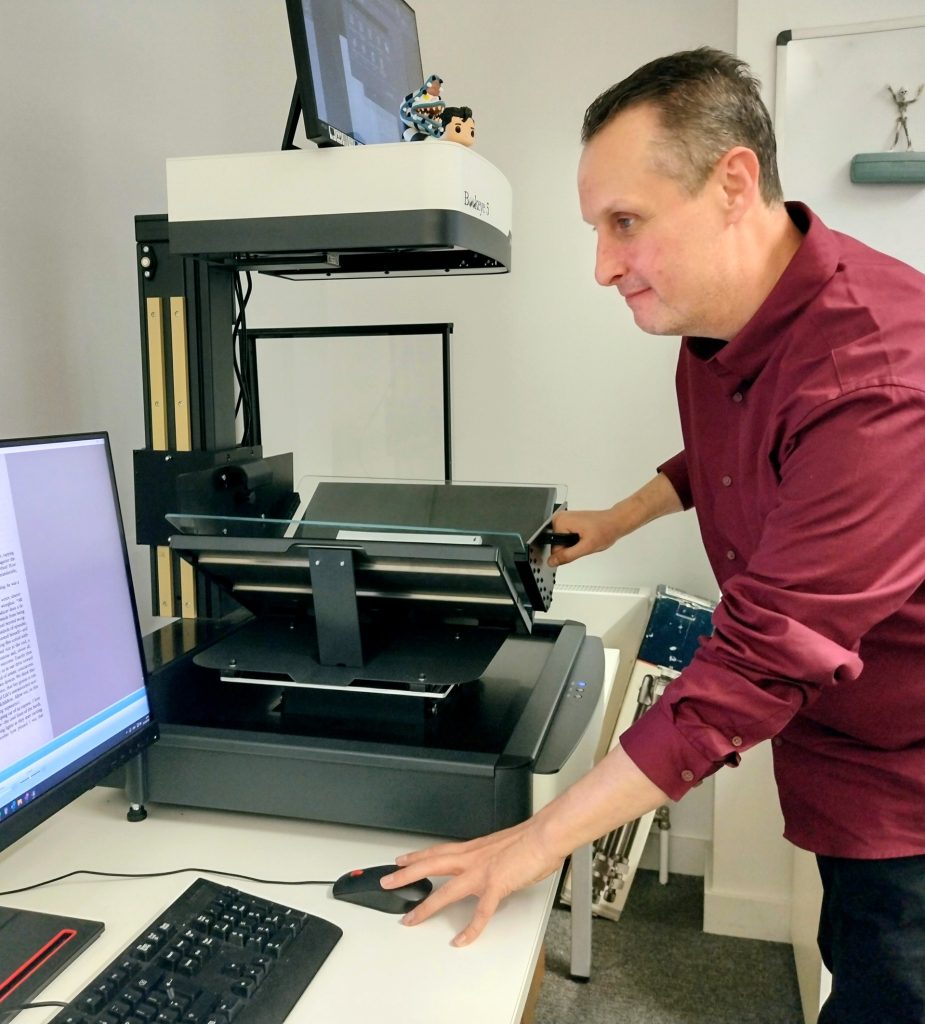
Lee-Jones in the BCU Digitised Services Office. Photo provided by Kip A. Darling, used with permission.
RapidILL now connects over 850 institutions across 36 countries, representing diverse accessibility practices. Australian libraries, for instance, often include title and verso pages in chapter scans—a convention we’ve adopted at BCU. Yet the most significant driver for improved accessibility comes from regulatory change in the United States.
The U.S. Department of Justice’s final rule on Title II of the Americans with Disabilities Act (ADA), published April 24, 2024, requires public academic libraries to ensure their digital services meet WCAG 2.1 AA standards by April 2026. This rule emphasises usability for people with disabilities, not just technical compliance.
In the UK, the Equality Act 2010 and the Public Sector Bodies (Websites and Mobile Applications) Accessibility Regulations 2018 require compliance with WCAG 2.2 AA standards. Although not specific to document delivery, the expectation that accessibility applies across all digital services is increasingly recognised in higher education.
(The authors are library practitioners, not legal professionals. Libraries should consult institutional legal counsel when interpreting accessibility requirements.)
By providing consistently high-quality, accessible scans, libraries contribute to a more inclusive international network of scholarly resources.
U.S. Perspective: Navigating Regulatory Requirements
Courtney Taulbee from the University of Kentucky provides valuable insight into how libraries are interpreting and responding to these regulatory changes:
“The implementation of ADA Title II requirements represents a significant shift for U.S. libraries, particularly those that are government or public institutions. The web content provided from these institutions that fall under the law, like public universities, must meet WCAG 2.1 AA standards by April 2026. This includes content licensed from third-party vendors, such as electronic resources.”
Taulbee notes the collaborative nature of the library community’s response:
“While institutions are determining at a local level how to interpret the law and how it affects their workflow and services, conversations in the ILL community are taking place to determine how best to meet the federal regulations. While not every library may be required to follow this law, the importance of meeting and improving accessibility within our work is widely valued within library services.”
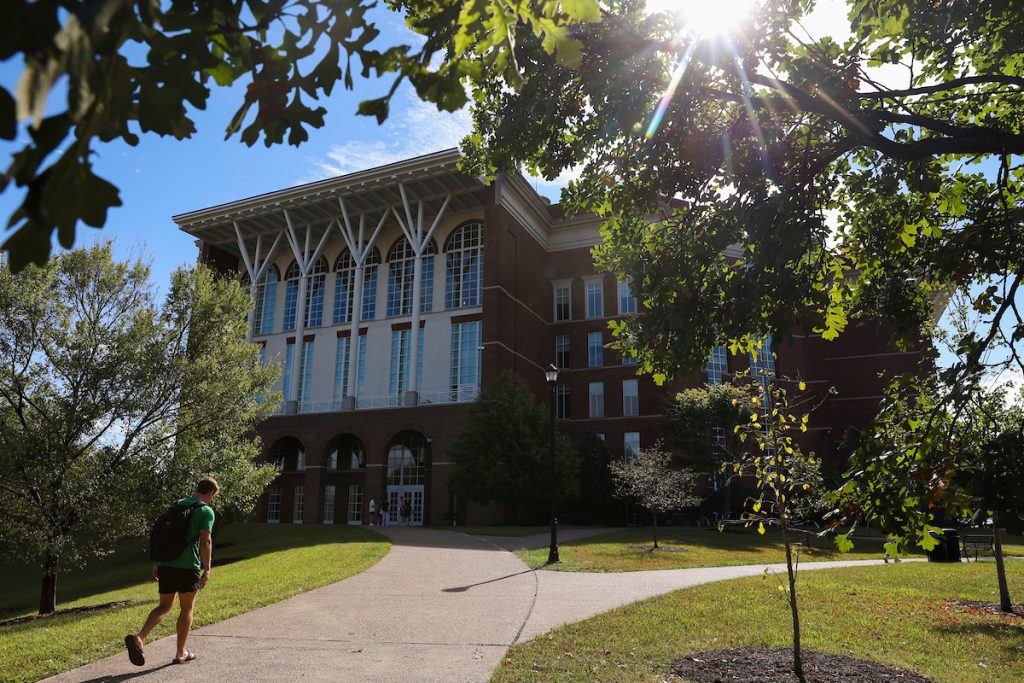
The University of Kentucky’s William T. Young Library. Image credit: Carter Skaggs, University of Kentucky Public Relations, used with permission.
Vendor engagement has become a key strategy:
“Working with our vendors is an essential first step. Our licensed electronic materials need to meet federal guidelines, so ensuring this is built into our vendor contracts allows us to meet one of the accessibility requirements for our users. This also helps with interlibrary loan lending practices, knowing that resources we receive are already in accessible formats.”
For materials that require scanning, automation helps but human review remains essential:
“At the University of Kentucky Libraries, we use scanners that include OCR as part of the process. However, technology does have limitations, so even default automations may require manual intervention from time to time.”
Taulbee’s vision for the future echoes a broader goal:
“Ideally, whether the requested content is born-digital or scanned in-house, the systems and platforms used in ILL services should have accessibility features built in. That way, libraries without the staffing or resources to meet accessibility standards independently can still rely on ILL systems to deliver accessible documents.”
This demonstrates how U.S. regulatory requirements are driving improvements that benefit the entire international community.
“By vendors including these components,” Taulbee concludes, “we not only meet legal obligations but also serve patrons better by providing content that is easier to use. Advocating for this with vendors is important, particularly as ILL services expand and evolve.”

Joseph S. Stauffer Library at Queen’s University, Canada. Image provided by Nicola Sikkema, Queen’s University, used with permission.
Canada’s Vision: An Inclusive, Barrier-Free Solution
Canadian libraries operate within their own accessibility framework but face similar challenges in serving diverse users. Nicola Sikkema from Queen’s University in Kingston describes the national context:
“Canada aims to become an inclusive and barrier-free country, introducing legislation such as the Accessibility for Ontarians with Disabilities Act (AODA) in 2005, which targets accessibility by 2025, and the Accessible Canada Act (ACA) in 2019, a federal law striving for a barrier-free Canada by 2040. How resource sharing digitisation falls within this legislation is ambiguous, but many Ontario universities want to develop shared best practices for accessible digitisation.”
This goal involves significant coordination.
“In 2019, the Ontario Council of University Libraries (OCUL) launched a shared library platform uniting 19 institutions, including Queen’s. Sharing resources brings the added benefit of shared workflows, but creating consistent standards for accessible digitisation remains a challenge due to differences in equipment, software, and staffing.”
At Queen’s University, a local solution emerged:
“We now provide scans that are searchable and readable by screen readers. Last year we purchased a Bookeye scanner and BSCAN ILL software, which removes fingerprints, makes files searchable, and outputs readable documents—all in one program.”
However, monitoring scan quality across automated workflows remains difficult.
“In the early days of RapidILL, we checked all articles for OCR quality before sending them to users,” Sikkema notes. “As staff capacity declined, we shifted to automatic delivery, meaning we could no longer review every file manually.”
Despite these constraints, Canadian libraries are actively testing innovations:
“As part of my work with the Alma Resource Sharing Working Group, we’ve tested sending alternative formats such as EPUB through RapidILL. Although results are promising, we still need vendor improvements to ensure lending libraries can view format-specific request notes.”
Looking ahead, Sikkema sees collaboration as key:
“April 2026 will bring new accessibility rules for our U.S. partners. Although compliance will be challenging, these changes will promote equal access. The majority of our RapidILL requests come from international partners; we hope our own best practices will help support them.”
Australian Innovation: Proactive Accessibility Approaches
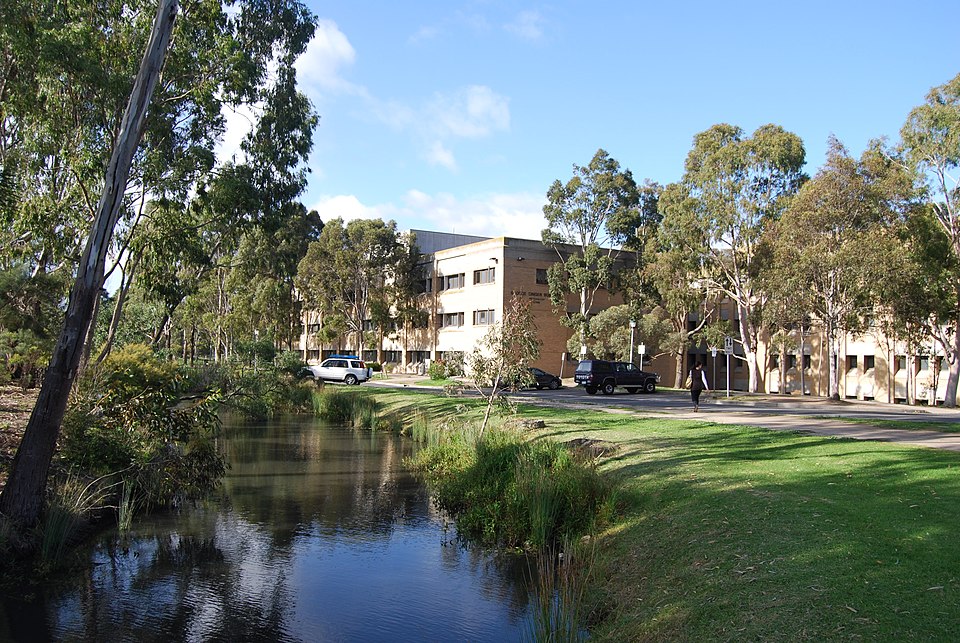
Moat with the George Singer Building in the background at La Trobe University, Bundoora, Australia. Image by Phil Lees via Wikimedia Commons, licensed under Creative Commons.
Australian libraries are also leading with proactive solutions. Karen O’Donoghue from La Trobe University Library reflects on the journey:
“The need to make educational materials equally available to all our patrons has been an ongoing aim. Early efforts involved photocopying chapters and posting them to patrons’ homes. Fast forward twenty years, and eBooks and electronic document delivery seemed like the answer—until publisher restrictions on downloading and printing began to limit accessibility.”
Recognising the issue, La Trobe shifted from reactive fixes to proactive service design:
“We saw that staff were responding to accessibility issues only after students received inaccessible files. In 2024, we introduced a new online request form allowing patrons to select their preferred format—large print, Word, audio, and more—with space for additional details. Library staff can now tailor delivery on first supply, and patrons appreciate the improved communication and accessibility.”
This approach demonstrates how understanding user needs upfront transforms accessibility from a corrective task into a preventative service model.
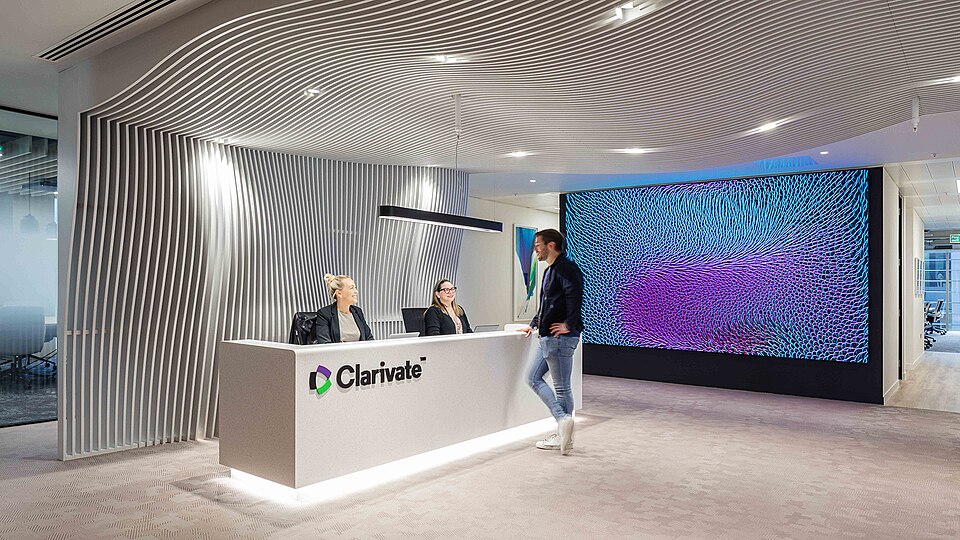
Main Reception at Clarivate Headquarters. Photo by Mictam999 via Wikimedia Commons, licensed under Creative Commons.
The Future: Technical Integration and Automation
Mike Richins, Director of Product Management, Resource Sharing at Clarivate, offers a vendor perspective:
“As the RapidILL, Rapido, and Alma Resource Sharing communities grow worldwide, Clarivate is uniquely positioned to support libraries and their users. Our goal is to provide access to materials not available locally as quickly and efficiently as possible through automation, reduced staff time, and equitable request distribution.”
Richins emphasises accessibility as a core design principle:
“We’re proud to collaborate with a global network of libraries committed to sharing their resources. Accessibility is now central to our conversations with libraries and informs our development roadmap.”
Recent enhancements demonstrate this focus:
“RapidILL now preserves any accessibility features in lender-provided files, ensuring those features are retained across different resource-sharing systems. Borrowers receive files with all accessibility elements intact, regardless of which systems are in use.”
Looking ahead to the ADA compliance deadline, Clarivate is developing new solutions:
“We’re implementing automated OCR processing for files lacking text recognition. With U.S. libraries facing the April 2026 ADA deadline, our goal is to have this in place beforehand, so all users receive accessible documents by default.”
Automation at this level could transform global accessibility, allowing libraries with limited technical capacity to provide consistently inclusive content.
Community Standards and Mutual Support
The strength of the RapidILL community lies in its reciprocity—libraries supporting one another across borders and time zones. When U.S. institutions face stringent accessibility requirements, the quality of scans provided by partners like BCU directly impacts their ability to serve users with disabilities. Similarly, Canadian and Australian initiatives contribute new ideas and workflows that raise standards globally.
This spirit of collaboration extends beyond compliance. By sharing best practices and maintaining high-quality standards, we collectively lift expectations across the network. Libraries in regions without strict legal obligations often exceed baseline requirements because they recognise their global role. This approach was exemplified in a recent ELUNA survey gathering best practices and case studies to drive community-powered training and advocacy for change.
Looking Forward
As we continue refining our processes, we remain mindful of our responsibility to the broader RapidILL community. The regulatory landscape continues to evolve, and user expectations for accessible content are rising too. Libraries that invest in accessible document delivery today position themselves as leaders in inclusive resource sharing.
Our journey from manual scanning to professional digitisation represents more than operational improvement—it reflects a commitment to ensuring that geographical location or institutional resources never determine access to scholarly materials. In an increasingly connected world, accessibility is not just a local concern; it is a global responsibility.
Acknowledgements
The author wishes to thank Lee Jones (Birmingham City University, UK), Karen O’Donoghue (La Trobe University, Australia), Courtney Taulbee (University of Kentucky, USA), Nicola Sikkema (Queen’s University, Canada), and Mike Richins (Clarivate) for their generous contributions and insights, which illustrate the international and industry dimensions of accessible document delivery.
Additional resource:
Orbis Cascade Alliance Accessibility Toolkit: https://www.orbiscascade.org/programs/dux/documentation/accessibility-toolkit/

Sep 4, 2024 | Articles

One Form to Rule Them All
In the world of ILL, nothing ever stands still and Durham’s experience with a single resource request form (FIL Journal, issue 70, February 2022, pages 21-25) is certainly no exception. During the COVID pandemic we set up a single form to cut through the confusion of all the services and request methods we had in operation at the time. Students just needed to tell staff what they wanted, and our triage team would check requests and forward them on to Customer Services, ILL or Acquisitions to satisfy the request.
Jump forward and the situation has completely changed. Panic over COVID has waned and we’re no longer going into complete lockdown whenever a new wave hits us. Students are heading back to campus and libraries are scaling back on the additional services they offer. When COVID struck, Durham was in the throes of tendering for a new library management system, so this was dusted off and in August 2022 we ended up with a sparkly new Alma system. Compared to our previous system Alma is unbelievably complex. To keep things simple the decision was taken fairly early on to just go with the out of the box request forms available in Alma, rather than try to design another single request form which would do everything the old one did, plus automate the triage process and push the data into the separate request forms.
 Knowing that we would be moving back to individual request forms we made sure that the forms were clearly visible, conveniently placed and we planned plenty of user information advertising the changes. As soon as we went live with Alma and put the new forms into operation, we started getting compliments (particularly from lecturers) about how simple and fast the new service was. Part of this will be because we automated RapidILL, so article requests with sufficient information would be shunted into RapidILL without any ILL staff intervention and supplied direct to the user at any time of the day or night. For these requests we effectively have a 24/7 service, rather than 9-5pm, Monday-Friday. Cutting out the time the requests languished in the triage team email will have helped dramatically. When designing the single request form, we were overly optimistic about how quick the triage process would be. In practice this ended up a low priority task and junior staff were often whisked away to do other work when other areas were short staffed. It wasn’t unusual for requests to take 6 – 10 hours to reach ILL and there were days (too many of them) when no requests were forwarded to us at all. Getting requests feeding directly into Alma was a relief and our customers have certainly noticed the difference.
So, my conclusions having tried a one-stop-form? (And I should stress here that this is only my personal opinion.) While the students initially cried out that the services were too complicated, they haven’t complained when we withdrew the single form. They are using a smaller range of services and are coping fine without the extra help. Lecturers prefer the individual forms because they know what they want and can go straight to the service they need, without the need to add extra notes to the request to ensure that the library buys, rather than borrows, the title. (Too many mistakes happened that way.) As an interim measure, the single form was useful at a time where there was too much confusion in everyday life, with lockdown rules changing on an almost daily basis, but the format we were forced to use was massively staff-time intensive. Our experience of using the single form has had its benefits: it caused a fundamental change in how we operate, and teams are now more relaxed about passing requests about internally. For the ILL team, at this current time, the single forms are the best option and current customer feedback seems to back this up.
In short, while you can change services due to public outcry, you’ll never be able to please everyone at the same time, and as the situation changes you have to be flexible and just do the best you can. In an ideal world it would be lovely to have a single form which students could use (with automated triage this time, to keep things speedy) running alongside individual service forms for the expert users who know exactly which service they want. For me, that’ll have to stay a fantasy for the time being, but it’s definitely on my wishlist for the future.


 At Interlend 2025 we asked delegates, what’s next for your interlibrary loan service? Libraries from across the UK shared some insights about how their own services are developing: